Bio
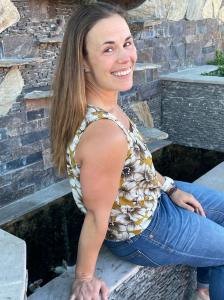
Erin M. Bank lives, works, runs, and writes in San Francisco, CA. She works as a research strategy consultant to make money, and as a writer to make art.
Erin was born in Tucson, AZ. Her family moved to Northfield, MN when she was seven, so she considers the Midwest her true roots. She still has the collection of spiral-bound notebooks holding the stories she’d write late at night, her first foray into creative writing. As a student at the University of Rochester in New York, she started down the lab rat career path, earning a BS in Biochemistry (see scientific credentials below). She was one of those weird scientists who also enjoyed pulling all-nighters to write essays for her literature and history electives. She went directly on to graduate school at the Weill Cornell Medical College on the Upper East Side of Manhattan, earning a PhD in Pharmacology for her work studying the parasite that causes malaria. She enjoyed defending the placement of “that” versus “which” as much as the scientific conclusions of her experiments. As a postdoctoral fellow at the Hebrew University of Jerusalem, Erin wrote and edited nearly every word of English that was produced by her lab, from emails to publications to grants, and once again discovered her love of the written word. Upon her return to the US, she spent time freelancing and consulting as a science editor and writer, which led to a role at UCSF writing and editing grant proposals. She now directs research strategy and is available for grant writing and consulting work. Her favorite days on the job are those she gets to write and collaborate with smart people.
Erin Bank Bank writes for the Sunset Beacon/Richmond Review newspapers, and has been published in The Frisc, The Bold Italic, and SF Weekly. Her fiction has been published in the Adelaide literary journal. She has taken classes at the Writer’s Studio, Writing Salon, and the Grotto in San Francisco. She has participated in writing retreats coached by Jen Louden, Lisa Jones, Marianne Elliot, and Laurie Wagner. She is a member of The Ruby and the Northern California Writers Retreat community. She is querying her first literary fiction novel and drafting her second, along with short stories and creative nonfiction pieces.
Erin’s website, bankoferin.com, was inspired by her love of learning, researching, talking about, and writing about a wide range of subjects. She wants a single place where her entire writing life can live, from science to fiction. The website is a playground, a space to exchange ideas and information, without believing that inner critic that insists we should dedicate our lives to a single topic in order to be able to have–and publish–our opinions and ideas.
An important element of this website was her blog, The Latent Lollygagger, where Bank reveals her personal struggles and successes in the face of depression and anxiety. It is featured as a Feedspot Top 30 Depression Blog. This blog now lives at Substack.
When she’s not sitting at a desk, Erin Bank is running the trails of Marin County and Golden Gate Park, walking along the beach with her husband and dog, remembering how to play piano, trying to learn how to surf and kite surf, and keeping her streak alive with the NY Times crossword puzzle.
Scientific Credentials
Education
- BS cum laude, Biochemistry, University of Rochester
- PhD, Department of Pharmacology, Weill Cornell Medical College
- Postdoctoral Fellowship, Department of Genetics, Hebrew University of Jerusalem, Givat Ram, Israel
Positions and Honors
- Director of Research Strategy, Helen Diller Family Comprehensive Cancer Center, University of California, San Francisco
- Associate Director for Programs and Planning, Helen Diller Family Comprehensive Cancer Center, University of California, San Francisco
- Research Development Specialist and Manager of the Large Grant Proposal Development Program, Research Development Office, University of California, San Francisco
- Postdoctoral Fellow, laboratory of Dr. Yosef Gruenbaum, Department of Genetics, Hebrew University of Jerusalem, Givat Ram, Israel
- Graduate Student, laboratory of Drs. Lonny Levin and Jochen Buck, Department of Pharmacology, Weill Cornell Medical College, New York
- Student Research, Laboratory of Dr. Mahin Maines, Department of Biochemistry, University of Rochester, New York
- Student Participant, National Institutes of Health (NIH) Research Experience for Undergraduates (REU), Laboratory of Dr. Michael Rea, Department of Biology and Biochemistry, University of Houston, Texas
- Student Participant, Life Sciences Summer Undergraduate Research Programs (LSSURP), Laboratory of Dr. Steven Seybold, Department of Entomology, University of Minnesota
Publications
- Bank EM, Small EJ, Ashworth A, Hiatt RA (2023) Cancer Research in 2030: A unique strategic planning process at a comprehensive cancer center, Preventive Oncology & Epidemiology, 1:1, 1-9, DOI: 10.1080/28322134.2023.2265563
- Keenan BP, Sibley A, Zhang L, Westring AF, Velazquez AI, Bank EM, Bergsland EK, Boreta L, Conroy P, Daras M, Hermiston M, Hsu G, Paris PL, Piawah S, Sinha S, Sosa JA, Tsang M, Venook AP, Wong M, Yom SS, Van Loon K. Evaluation of Culture Conducive to Academic Success by Gender at a Comprehensive Cancer Center. Oncologist. 2023 Jul 13:oyad194. doi: 10.1093/oncolo/oyad194. PMID: 37440206.
- Bank EM, Ben-Harush K, Feinstein N, Medalia O, Gruenbaum Y. Structural and physiological phenotypes of disease-linked lamin mutations in C. elegans. J Struct Biol. 2012 Jan;177(1):106-12. doi: 10.1016/j.jsb.2011.10.009. Epub 2011 Nov 7. PMID: 22079399.
- Mattout A, Pike BL, Towbin BD, Bank EM, Gonzalez-Sandoval A, Stadler MB, Meister P, Gruenbaum Y, Gasser SM. An EDMD mutation in C. elegans lamin blocks muscle-specific gene relocation and compromises muscle integrity. Curr Biol. 2011 Oct 11;21(19):1603-14. doi: 10.1016/j.cub.2011.08.030. Epub 2011 Sep 29. PMID: 21962710.
- Bank EM, Ben-Harush K, Wiesel-Motiuk N, Barkan R, Feinstein N, Lotan O, Medalia O, Gruenbaum Y. A laminopathic mutation disrupting lamin filament assembly causes disease-like phenotypes in Caenorhabditis elegans. Mol Biol Cell. 2011 Aug 1;22(15):2716-28. doi: 10.1091/mbc.E11-01-0064. Epub 2011 Jun 8. PMID: 21653823; PMCID: PMC3145547.
- Bank EM, Gruenbaum Y. Caenorhabditis elegans as a model system for studying the nuclear lamina and laminopathic diseases. Nucleus. 2011 Sep-Oct;2(5):350-7. doi: 10.4161/nucl.2.5.17838. Epub 2011 Sep 1. PMID: 21970988.
- Bank EM, Gruenbaum Y. The nuclear lamina and heterochromatin: a complex relationship. Biochem Soc Trans. 2011 Dec;39(6):1705-9. doi: 10.1042/BST20110603. PMID: 22103511.
- Azzam ZS, Sharabi K, Guetta J, Bank EM, Gruenbaum Y. The physiological and molecular effects of elevated CO2 levels. Cell Cycle. 2010 Apr 15;9(8):1528-32. doi: 10.4161/cc.9.8.11196. Epub 2010 Apr 15. PMID: 20372066.
- Bank, EM. Adenylyl Cyclase Activity in Plasmodium Falciparum: An Essential Carbon Dioxide Sensor and Cell Cycle Regulator. Thesis (PhD). Cornell University, January 2009. Print.
- Salazar E*, Bank EM*, Ramsey N, Hess KC, Deitsch KW, Levin LR, Buck J. Characterization of Plasmodium falciparum adenylyl cyclase-β and its role in erythrocytic stage parasites. PLoS One. 2012;7(6):e39769. doi: 10.1371/journal.pone.0039769. Epub 2012 Jun 26. PMID: 22761895; PMCID: PMC3383692. *co-first author
- Kamenetsky M, Middelhaufe S, Bank EM, Levin LR, Buck J, Steegborn C. Molecular details of cAMP generation in mammalian cells: a tale of two systems. J Mol Biol. 2006 Sep 29;362(4):623-39. doi: 10.1016/j.jmb.2006.07.045. Epub 2006 Jul 28. PMID: 16934836; PMCID: PMC3662476.
 Bank of Erin